Fastener Head Styles
The head of a fastener determines how it sits against a surface, how it is driven, and how much load it can distribute. Choosing the correct head style is essential for strength, appearance, accessibility and compliance with engineering standards.
Below is an introduction to the most common head styles used for machine screws and bolts, along with typical applications and reasons for choosing each type.
Common Machine Screw Head Styles
These head styles are widely used in electronics, appliances, metalwork, and general engineering. They are defined by their profile and the drive type used to install them.
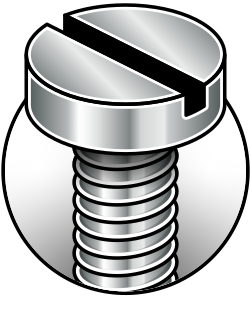
A tall, cylindrical head with straight sides and a flat top. Provides strong tool engagement and is commonly used in electrical fittings, terminals and light machinery.
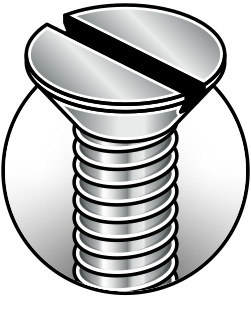
A conical head designed to sit fully flush with the surface. Ideal for hinges, plates and applications where a smooth, unobtrusive finish is required.
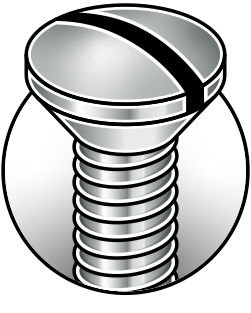
A decorative variation of the countersunk head. The domed top remains visible while the underside sits flush, making it popular for hardware and visible fittings.
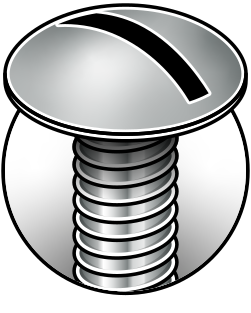
A wide, low‑profile head with a gently curved top. Offers a larger bearing surface for improved load distribution and a neat appearance.
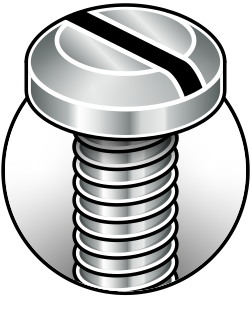
A versatile, slightly rounded head with a broad bearing surface. Suitable for general‑purpose fastening across metalwork, plastics and assemblies requiring a tidy finish.
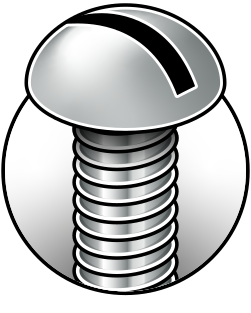
A domed, high‑profile head with a wide bearing surface. Commonly used on electrical fittings, light assemblies and applications where a smooth, rounded appearance is preferred.
Common Bolt Head Styles
Bolt heads are designed for higher strength applications and are typically driven using spanners, sockets or hex keys.
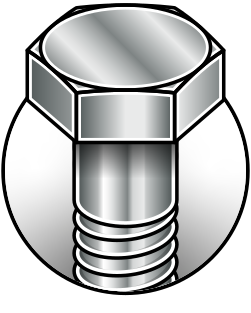
A six‑sided head designed for strong torque transfer and easy access with spanners or sockets. Used across bolts, set screws and many heavy‑duty fasteners where strength, accessibility and reliable tightening are essential.
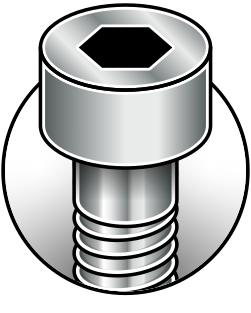
A cylindrical, high‑strength head with straight sides and a flat top, designed to deliver high clamping force in compact assemblies. The internal hex socket allows installation where external wrench access is limited.
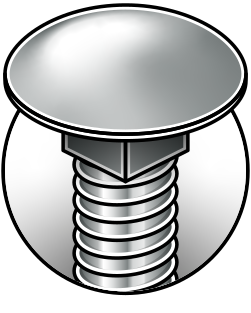
A smooth, domed head paired with a square neck beneath it. The neck locks into timber or metal to prevent rotation during tightening, making it ideal for joinery and fabrication.
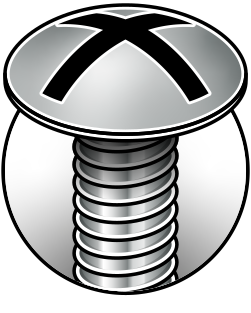
A wide, low‑profile head designed to spread load over thin sheet materials such as roofing and cladding panels. The broad bearing surface reduces pull‑through, while the cross‑slot allows installation from above.